Hedgehog Arterivirus – a newly emerging threat to hedgehogs
Jenny Cantlay, Dr Akbar Dastjerdi and Dr Samantha Holland
Hedgehog Arterivirus – a newly emerging threat to hedgehogs
Our native wildlife populations face numerous threats from habitat degradation and loss, pollution, climate change, road traffic accidents and disease. European hedgehogs, once common in rural and urban areas, are now less frequently seen due to recent population declines. They are recognised as a species of conservation concern - classified as ‘near threatened’ on the International Union for Conservation of Nature (IUCN) red list in Europe.
A newly emerging disease threat to the species is hedgehog arterivirus that may further threaten their population. The novel virus was first recognised in 2019 when there was an outbreak of unusual disease in hedgehogs at a wildlife rescue centre. Over four months, juvenile and adult hedgehogs were affected and presented with appetite loss, respiratory and neurological signs, often leading to death. This outbreak led to the deaths or euthanasia of over 200 individuals. This was initially thought to be a hospital-acquired infection. The APHA was alerted to this disease outbreak due to the magnitude of fatalities.
Postmortem investigations were conducted by the veterinary surgeon at the wildlife rescue centre. Whilst gross pathology did not show any abnormalities, tissue samples were sent for histopathological examination. Specialist veterinary examination by a pathologist at the International Zoo Veterinary Group (IZVG) identified similar microscopic lesions in the fixed brain tissues of three hedgehogs, consistent with encephalitis. However, no specific cause could be established through these examinations. The IZVG consulted scientists at APHA and further investigations using next generation sequencing (NGS) identified a novel virus in three hedgehogs, named hedgehog arterivirus (HhAV). Arteriviruses can infect a wide range of mammals but are commonly found in mice, horses, pigs and monkeys and are host specific.
In hedgehogs, arterivirus can be present without any signs of disease. In the clinical cases from the rescue centre outbreak, early indicators of the disease were wobbliness, breathing difficulties and lethargy. Nervous signs generally occured within three days of appetite loss and included tremors, twitching, increased sensitivity to stimuli, disorientation, recumbency, paddling and seizures.
A collaborative study between APHA, IZVG, and Garden Wildlife Health was undertaken to investigate whether HhAV was the cause of the encephalitis using microscopic and hybridisation techniques. The virus was identified in areas of brain with encephalitis, suggesting a link between the virus and inflammation in the brain. The virus was also found in other organs such as lung, heart, liver, kidney, testes and blood vessels, indicating a systemic (across all body systems) infection.
Thousands of hedgehogs are received at wildlife rescue and rehabilitation centres annually. Due to the concerns of this virus being a hospital-acquired infection, additional research is being undertaken to better understand its occurrence in wild and captive rehabilitated hedgehogs. Investigation of the virus genome will also help to identify its diversity and the relationships between the viruses found in different animals and locations.
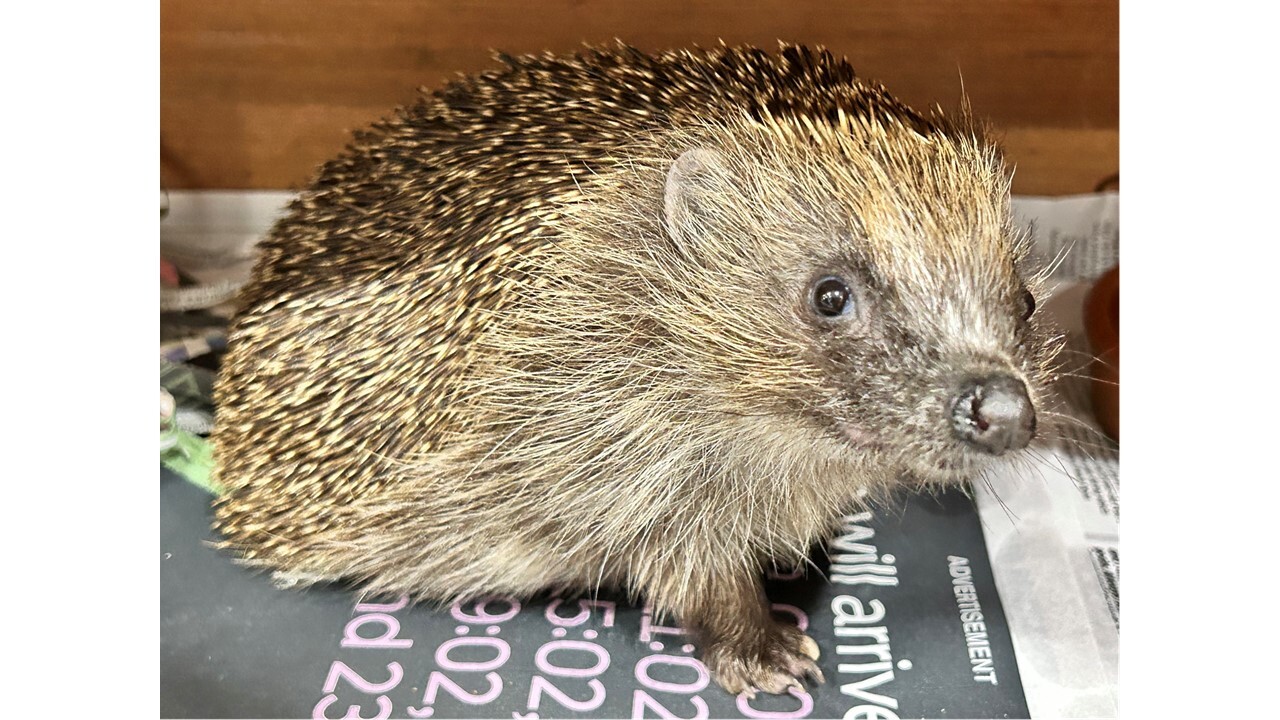
Collaborations with rescue centres and the APHA National Wildlife Management Centre provided the research project with the carcases of free-living and captive hedgehogs as well as faecal samples from wild hedgehogs. Around 80% of the dead hedgehogs submitted tested positive for the HhAV indicating that a large proportion of hedgehogs brought into rescue centres are infected. About 14.8% of faecal samples received from wild hedgehogs tested low positive for the HhAV, indicating presence of HhAV carriers amongst the wild population of hedgehogs. HhAV has also been detected in a free-living hedgehog with encephalitis, euthanised due to severe neurological signs. These research collaborations have also enabled the development of guidelines for reducing the spread of the virus in rescue and rehabilitation establishments – essential to mitigate disease risk. Unfortunately, there is no treatment for HhAV.
This ongoing research will further increase our understanding of this virus, its distribution in the GB hedgehog population and predisposing factors that contribute to neurological disease. The future aim is to develop robust non-invasive tests to identify carrier hedgehogs and for diagnosis of disease in live animals. This would enable rescue centres to quarantine the most ‘at risk’ individuals on admission. The risks from infectious disease, such as HhAV, are increased in captive environments and evidence-based mitigation strategies essential to reduce these risks. This research is part of the wildlife disease surveillance work undertaken by the APHA.
This article is an edited version of the APHA Science Blog Is a newly discovered virus contributing to the decline of our wild hedgehogs? – APHA Science Blog
Further information on wildlife surveillance
The APHA Diseases of Wildlife Scheme (DoWS) delivers national surveillance for wildlife disease in England and Wales. APHA also chairs the Great Britain Wildlife Disease Surveillance Partnership which publishes emerging threat reports.
For any hedgehogs found dead please contact the APHA DoWS Animal disease scanning surveillance at APHA - GOV.UK and the Garden Wildlife Health Project Garden Wildlife Health
More information on this disease Arteriviruses in Hedgehogs - Garden Wildlife Health
References
Dastjerdi A, Inglese N, Partridge T, Karuna S, Everest DJ, Frossard JP, Dagleish MP, Stidworthy MF. Novel Arterivirus Associated with Outbreak of Fatal Encephalitis in European Hedgehogs, England, 2019. Emerg Infect Dis. 2021 Feb;27(2):578-581. doi: 10.3201/eid2702.201962.
Dastjerdi A, Davies H, Inglese N, Holland S, Samborskiy DV, Gorbalenya AE. Intraspecific variation of the hedgehog arteriviruses, which may constitute a new genus in the subfamily Heroarterivirinae of the family Arteriviridae. Arch Virol. 2025 Feb 8;170(3):49. doi: 10.1007/s00705-025-06231-7.
Lean FZX, Stidworthy MF, Dastjerdi A, Partridge T, Smith S, Gough J, Núñez A, Lawson B, Seilern-Macpherson K. Colocalization of hedgehog arterivirus 1 (HhAV-1) and histologic lesions in the European hedgehog (Erinaceus europaeus) with neurological disease. Vet Pathol. 2024 Dec 12:3009858241300553. doi: 10.1177/03009858241300553.