Rowing for Science: How GB Row team Coastal Odyssey is helping uncover the true scale of microplastic pollution around the British Coastline
In June 2024, Hannah, Education Lead at Vet Sustain, rowed over 2,000 miles around Great Britain setting a new Guinness World Record for the fastest unsupported mixed team to complete the circumnavigation. Every mile also served a second purpose, collecting vital scientific data to better understand the health of our oceans. The data collected has been analysed by the University of Portsmouth and their findings are helping to provide a clearer picture of ocean pollution around the GB coastline.
Vet Sustain
In June 2024, while most people experienced Britain’s coastline from the beach, a small team of 6 rowers, including Hannah, Vet Sustain’s Education Lead, experienced it the hard way; rowing for two hours at a time, continuously, unsupported, through rough seas, relentless headwinds and long nights on the oars.
As part of Team Coastal Odyssey, they rowed over 2,000 miles taking part in the GB Row Challenge, completing a circumnavigation of Great Britain in just over 49 days and setting a new Guinness World Record for the fastest unsupported mixed team.
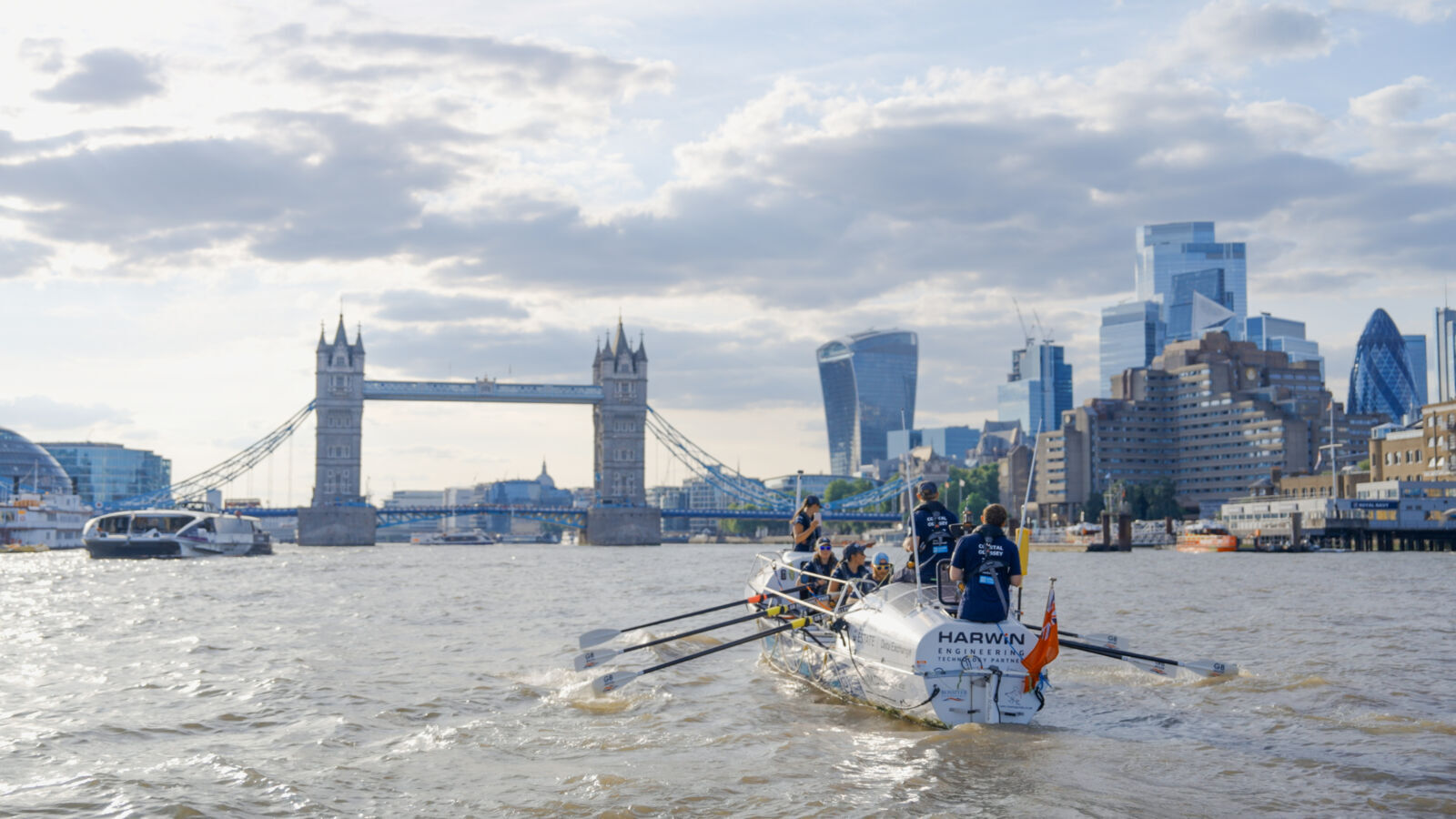
But this row wasn’t just about endurance or Guinness World Records. Every mile also served a second purpose: collecting vital scientific data to better understand the health of our local oceans and seas. The data collected has been analysed by the University of Portsmouth and their findings are helping to provide a clearer picture of ocean pollution around the GB coastline.
A floating research platform
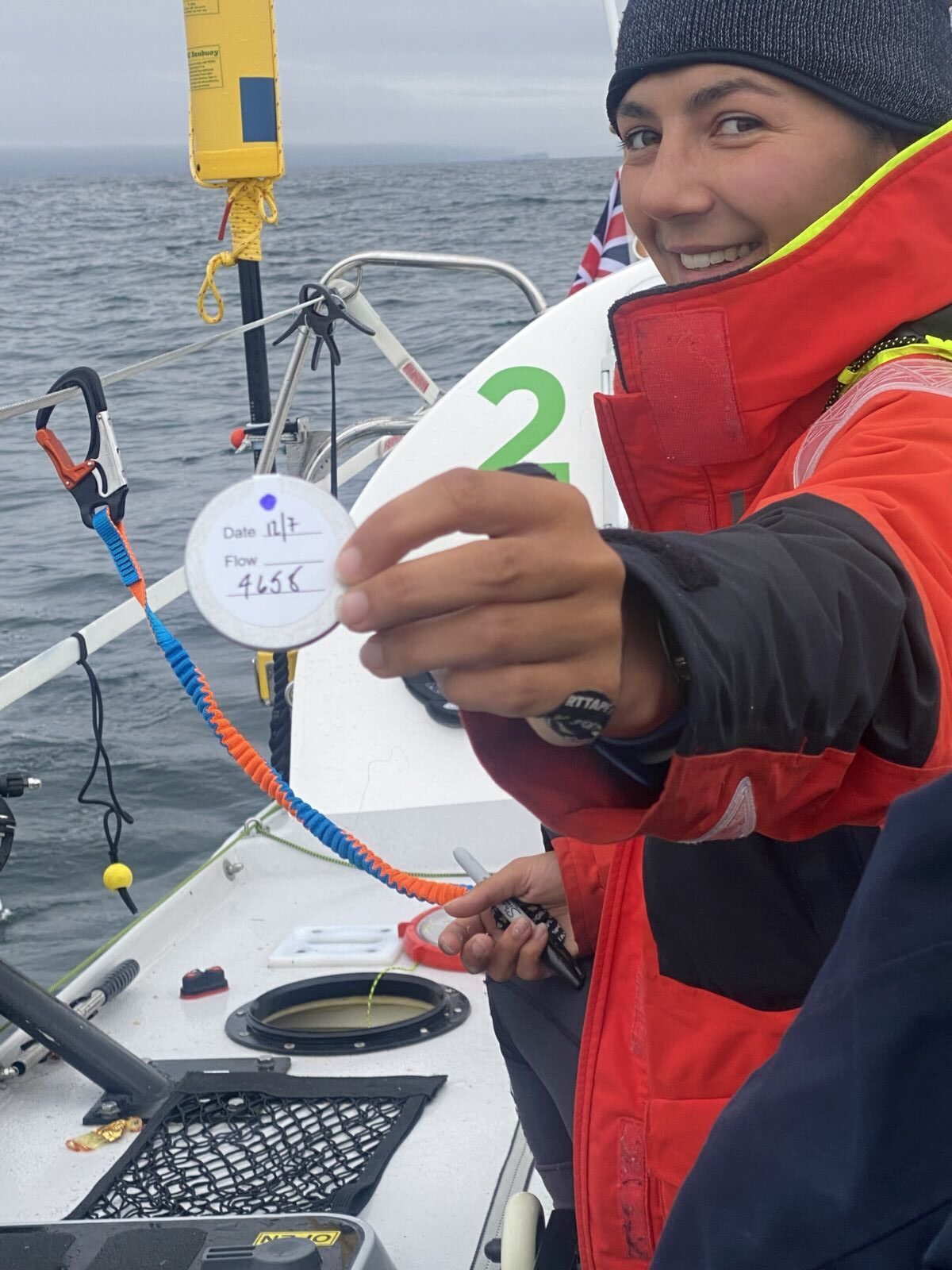
Throughout the journey, Coastal Odysseys boat ‘intrepid’ doubled-up as a mobile research station fitted out with specialist equipment in partnership with the University of Portsmouth to collect data on microplastic pollution, water temperature, underwater sound pollution, biodiversity and water salinity.
One of the most striking findings was that of the microplastic pollution levels, which were found to be in significantly higher concentrations than previously recorded. Data collected by Hannah’s team found an average of 59 microplastic particles per cubic meter (MP/m³) of seawater, more than double the levels reported in comparable surveys carried out in 2022 and 2023. Using specialist pumps and ultra-fine filters, the team filtered seawater for up to 3.5 hours a day at various sampling sites around the Great British coastline. The samples were later analysed using advanced laboratory techniques, including microRaman spectroscopy, at the University of Portsmouth, allowing researchers to detect particles as small as 0.04mm.
As explained in the GB Row 2024 Scientific Report ‘Higher concentrations are consistently found around the Thames, the Irish Sea/North Channel, whilst concentrations in the North East of Scotland and on the East coast of England, South of Newcastle and North of Hull show consistently low concentrations’
The Irish Sea recorded a peak of 418 MP/m³, the highest concentration observed across three years of monitoring. Importantly, researchers caution that this doesn’t necessarily mean pollution has suddenly worsened. Rougher weather and sea conditions in 2024 may have stirred particles deeper in the water column, making them easier to detect.
What’s more likely is that improved sampling methods are revealing pollution that has long gone unnoticed. Nearly all particles detected were smaller than 0.3 mm, tiny fragments that previous monitoring techniques would have missed entirely. As the science improves, so does the picture, and sadly and it’s often more concerning.
These smaller particles are considered particularly problematic because they are more easily ingested by marine life, potentially affecting growth, reproduction and ecosystem health.
Why this matters for sustainability
Plastic pollution is often framed as a visible shoreline issue - bottles, nets and litter. But microplastics represent a more insidious challenge. They’re largely invisible, widely distributed and extremely persistent. Understanding where they accumulate, how they move and which species are exposed is critical to:
protecting marine biodiversity
informing policy and waste reduction strategies
improving coastal management
supporting evidence-based sustainability decisions
By contributing to this long-term dataset, which will be hosted on The Crown Estate’s Marine Data Exchange and made available to scientists worldwide, the GB Row Challenge helps create the evidence base needed for real environmental action.
Endurance with purpose
Physically, the row was relentless.
Two hours on, two hours off. Day and night. For nearly seven weeks. Low-pressure systems, strong head winds and extended periods waiting at anchor for storms to pass.
Yet every sample collected added value. For team Coastal Odyssey, the experience was about more than completing a circumnavigation or setting a record. It was about contributing to something bigger.
By combining endurance sport with environmental science, Coastal Odyssey helped shine a light on the hidden pressures facing our seas, and played a small but meaningful role in the push towards healthier, more sustainable oceans.
As Hannah put it: ‘Breaking a world record is something we’re proud of, but the real reward is knowing that every oar stroke contributed valuable data to help understand the health of Britain’s coastal waters’
Building a long-term picture of ocean health
This is the third national report from the GB Row Challenge, which is steadily building a multi-year record of environmental change around Britain. You can view the full report here: https://gbrowchallenge.com/wp-...